At what age should you create a will?
Making a will is not something reserved for the elderly or wealthy: life events at any age can make it one of the most important things you do for the people you care about.
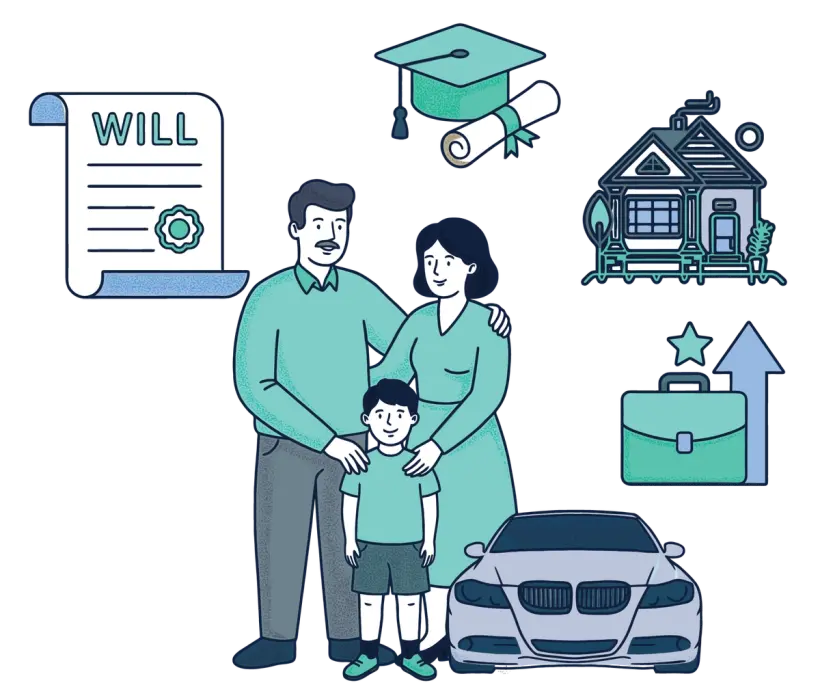
Many people picture will-writing as something to deal with in later life, a task for retirement perhaps, or a response to a serious health scare. In reality, a will can be one of the most valuable things you put in place at almost any adult age. The question is not so much "how old do I need to be?" as "have any of the moments that matter already happened?"
Is there a minimum age to make a will?
In many jurisdictions, including much of the United Kingdom, the minimum age to make a valid will is 18. However, rules vary from place to place, and there are specific exceptions in some legal systems (for example, for members of the armed forces in certain countries). It is always worth checking the requirements that apply to your own situation, and consulting a qualified legal professional if you are unsure.
Beyond the legal minimum, the more useful question is not your age in years: it is what is happening in your life.
Life events that signal the right moment
Rather than waiting for a particular birthday, it helps to think of certain milestones as natural prompts. Any of the following can be a good reason to sit down and put your wishes in writing.
Starting your career
When you begin earning, you may acquire savings, pension entitlements, or workplace benefits. Even modest assets are worth directing consciously. A will ensures that whatever you build, however early in life, goes where you intend.
Getting married or entering a civil partnership
In many legal systems, getting married or entering a civil partnership can automatically revoke an existing will. This means a will you made before your wedding may no longer be valid on the day after it. If you are planning to marry or form a civil partnership, updating or creating a will around that time is generally a sensible step.
Buying property
A home is often the most significant asset a person owns. Without a will, what happens to your share of a property may be decided by intestacy rules rather than your own wishes. Those rules do not always produce the outcome you would have chosen, particularly for unmarried couples.
Having or adopting children
This is perhaps the most compelling reason of all. A will is generally the mechanism by which parents can name a guardian for their children, the person they would want to take care of them if both parents were no longer able to. Without that instruction recorded legally, the decision may fall to a court. You may also use a will to set up a trust, which can hold assets for children until they reach an age at which you feel they are ready to manage them. For any parent, a will is not a morbid document: it is an act of care.
Receiving an inheritance or gift
If you receive a meaningful inheritance or gift, that asset joins everything else you own. A will lets you decide what happens to it next, passing it on in a way that reflects your values and relationships.
Travelling or relocating
If you are planning extended travel or moving abroad, it is worth making sure your affairs are in order before you go. Time zones and distance can complicate things considerably for those left behind if something unexpected happens.
Starting a business
Business interests (a shareholding, a partnership stake, or an ownership stake in a sole-trader operation) are assets too. A will can address what should happen to them, which can make a significant difference to partners, co-founders, employees, and family members alike.
What happens if you do not have a will?
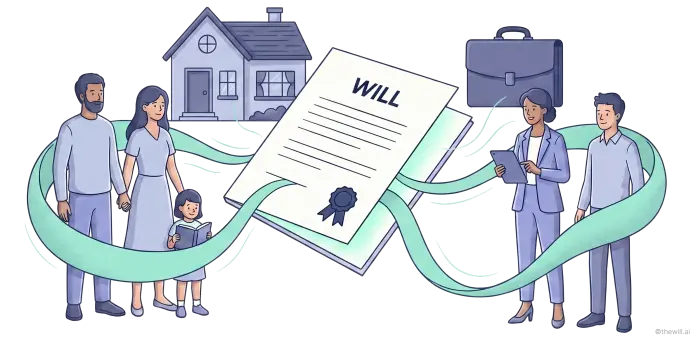
Dying without a valid will is known as dying intestate. When this happens, the distribution of your estate is generally determined by intestacy rules, a set of legal defaults that vary by jurisdiction. These rules follow a prescribed order of priority and may not reflect your actual wishes at all.
- An unmarried partner may receive nothing, regardless of how long you were together.
- Friends, colleagues, or charities you cared about may be overlooked entirely.
- Children may receive assets at a younger age than you would have chosen.
- Without a named guardian in a will, decisions about who cares for your children may rest with a court.
- Family members you were estranged from could inherit under default rules.
Intestacy rules are a legal default, not a reflection of your wishes. A will is how you replace the default with your own decisions.
None of this is hypothetical. It affects people of all ages and all levels of wealth. The common thread is simply that they did not get around to writing a will.
A will is not a one-time task
It is worth understanding that a will you write at 28 may well need updating by the time you are 38. Life changes, and your will should change with it. Relationships begin and end, families grow, assets come and go, and your priorities shift. Reviewing your will periodically, and certainly after any significant life event, helps ensure it continues to represent what you actually want.
Making a new will or updating an existing one does not have to be an arduous process. Keeping it current is simply part of managing your affairs responsibly.
Starting is simpler than most people expect
One of the main reasons people delay making a will is the assumption that it will be complicated, time-consuming, or expensive. For many people in straightforward circumstances, that assumption does not hold.
TheWill.ai is a guided, self-service platform designed to help you create a legally structured will at your own pace. You work through a clear, step-by-step process and make your own decisions throughout. There is no jargon and no unnecessary complexity. If your situation involves specific legal questions, consulting a qualified professional remains the right approach, but for many people, getting started is more accessible than they assumed.
The right age to make a will is generally whichever age you are now, particularly if any of the life events above apply to you. There is no benefit in waiting, and a great deal of peace of mind in not having to.
You can begin today at thewill.ai.
Written by
TheWILL.ai Team
The editorial team at TheWILL.ai, dedicated to making estate planning accessible and modern.