Is your pension free of UK inheritance tax from April 2027? What the rules say
From April 2027 most pensions count towards a UK estate for inheritance tax. This article sets out which benefits are counted, which are excluded or exempt, and the questions to take to a regulated adviser.
People often ask about the April 2027 change in exactly this form: can you avoid inheritance tax on a pension, or at least reduce it? This article does not answer it with a plan, because a plan depends on facts about one person that no article has. What it can do is set out what the rules actually say, with sources, so the conversation with an adviser starts from the law rather than from a headline.
This is general information about UK inheritance tax as at September 2026, not tax, legal or financial advice. Whether any rule described here applies to a particular person depends on their circumstances, their schemes and the rest of their estate.
The short answer
For deaths on or after 6 April 2027, most unused pension funds and pension death benefits are counted in a person's estate for inheritance tax. That is the effect of the Finance Act 2026, and HMRC's technical note on inheritance tax on pensions describes it in detail. Before that date, most of those funds sat outside the estate.
The law does not treat every pension benefit the same way, though. Some benefits are excluded from the new charge altogether, some are covered by exemptions that already existed, and the ordinary nil-rate bands still apply. Each is set out below.
Is any pension benefit left out of the estate?
Yes. Four kinds of benefit are outside the new charge by definition. As at September 2026, the legislation and HMRC's technical note name death in service benefits paid because the member was employed when they died, dependants' scheme pensions paid to a qualifying dependant, small lump sums that commute such a pension, and a dependant's or nominee's annuity bought jointly with the member's own lifetime annuity.
These exclusions are defined by what the benefit is, not by what the member intended. Whether a particular benefit qualifies turns on the scheme's rules and the type of benefit paid, which is something the scheme administrator can confirm.
Does it matter who the pension goes to?
It can. The exemption for transfers between spouses and civil partners continues to apply to pension property, subject to its usual conditions, including those about where each of them is treated as resident. A surviving spouse or civil partner who receives the pension is generally in the same position as for any other asset they inherit.
Gifts to qualifying charities are also exempt from inheritance tax under the existing rules. That exemption extends to pension death benefits paid to a charity, including a charity lump sum death benefit, although the value is still counted in the estate first.
For anyone else, the new rules generally count the pension in the estate whoever receives it. A nomination or expression of wish guides the scheme when it decides who to pay, but the choice of nominee does not change whether the value is counted, other than through the exemptions above.
Do the nil-rate bands still apply?
They do, and the pension rules leave them as they were. As at September 2026 the nil-rate band is £325,000 and the residence nil-rate band is £175,000, with both frozen until April 2031. The residence nil-rate band also tapers for estates worth more than £2 million, and pension value can now count towards that figure; the pillar article on the April 2027 change explains how.
What about taking money out of a pension and giving it to your children?
Two separate sets of rules apply here.
Money drawn from a pension is generally taxed as income when it is taken, apart from any portion that the rules allow to be paid tax free. That happens at the time of withdrawal, whatever is done with the money afterwards.
Separately, gifts of any money, whatever its source, are subject to the existing inheritance tax rules on gifts, which gov.uk sets out as at September 2026: an annual exemption of £3,000, small gifts of up to £250 per person, exemptions for some wedding and civil partnership gifts, and an exemption for regular gifts made out of surplus income that meet its conditions. Other gifts made in the seven years before death can be counted in the estate, and where tax is due on those gifts, it is reduced on a sliding scale if death occurs between three and seven years after the gift.
How these rules apply to one person depends on their income, their other assets and their family's position, which is a question for a regulated adviser.
What about deaths before April 2027?
The new rules apply where the member dies on or after 6 April 2027. Where a member dies before that date, the rules that applied before the change continue to govern the pension, and most unused funds stay outside the estate for inheritance tax.
A note on the Autumn Budget
There has been press speculation that the Autumn Budget 2026 could change the inheritance tax rules on gifts. Nothing had been announced as at September 2026, so every figure in this article should be checked against gov.uk at the time it matters.
The information that makes any of this answerable
Every question above comes back to the same facts: which schemes exist, what each holds, what type of benefit each would pay, and who each nomination names. An adviser cannot say how the rules apply to a pension nobody can find, and for a death on or after 6 April 2027 the executor has to request a valuation from each scheme before the estate's tax can be worked out.
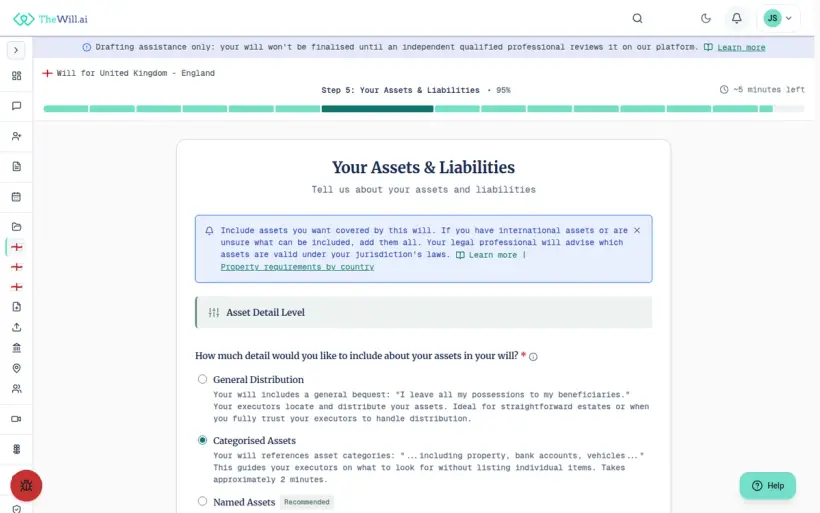
Retirement is often when those facts are scattered widest, across old workplace pots, a personal pension and money already in drawdown. The asset tracker has a place for each pension scheme with its contact details, member reference and nominees, so an executor can find and value them.
For a rough view of how the bands apply to a total, the inheritance tax calculator takes an estate value you enter. It is an estimate and does not decide whether a benefit is excluded or exempt. The UK pensions and inheritance tax guide sets out the April 2027 rules in more depth, and the inheritance tax guide covers the bands, exemptions and reporting generally.
Questions to take to a regulated adviser
A regulated financial adviser or tax adviser can answer what an article cannot. Questions worth taking to one include:
- Which of my pension benefits are counted in my estate from April 2027?
- Which of my benefits would be paid as a dependants' scheme pension or a death in service benefit?
- How do the spouse, civil partner and charity exemptions apply to my pensions, given where each of us is resident?
- How are pension withdrawals taxed, and how do the gift rules work?
- What would my scheme need to confirm about the type of each benefit it would pay?
Sources
- HM Revenue and Customs, Technical note: Inheritance Tax on pensions (updated 29 May 2026), gov.uk.
- Finance Act 2026, Royal Assent 18 March 2026.
- gov.uk, Inheritance Tax: gifts and exemptions, and nil-rate band and residence nil-rate band thresholds, as at September 2026.
Written by
TheWILL.ai Team
The editorial team at TheWILL.ai, dedicated to making estate planning accessible and modern.